
Ecommerce Website Development Cost in India: Complete Breakdown
.png/v1/fill/w_320,h_320/file.jpg)
Building an online store is no longer optional for businesses that want to grow in India's digital economy. However, one of the first questions every entrepreneur asks is: What is the actual website development cost in India?
The answer isn't a fixed number. It depends on your business goals, platform, features, design expectations, and long-term scalability. Whether you're a startup launching your first online store or an established brand planning a digital transformation, understanding pricing helps you make smarter investment decisions.
In this guide, BigBang explains every major cost factor, pricing range, and hidden expense involved in ecommerce website development in India so you can budget confidently and choose the right development partner.
What Is the Website Development Cost in India?
Website development cost in India refers to the total investment required to design, develop, launch, and maintain a website. For ecommerce businesses, this includes everything from UI/UX design and coding to payment gateway integration, security, hosting, and ongoing maintenance.
Most ecommerce websites in India typically cost anywhere between ₹40,000 and ₹15,00,000+, depending on complexity and business requirements.
A website should be viewed as a business asset - not an expense. A well-built e-commerce platform generates revenue for years.
Average Ecommerce Website Pricing in India
Website Type | Estimated Cost |
Basic Ecommerce Website | ₹40,000 – ₹80,000 |
Small Business Online Store | ₹80,000 – ₹2,00,000 |
Medium Business Ecommerce Website | ₹2,00,000 – ₹6,00,000 |
Enterprise Ecommerce Platform | ₹6,00,000 – ₹15,00,000+ |
Custom Marketplace Website | ₹10,00,000+ |
These are estimated ranges. Final pricing depends on your feature list and business objectives.
What Factors Affect Web Development Pricing?
Understanding web development pricing factors helps avoid unexpected costs later.
1. Website Design & Development
The overall architecture, coding quality, and functionality significantly impact pricing.
Development includes:
Front-end development
Back-end programming
Database setup
API integrations
Security implementation
More advanced functionality requires additional development hours.
2. UI/UX Design
A professionally designed interface improves customer engagement and conversion rates.
Good UI/UX Design focuses on:
Easy navigation
Fast checkout
Mobile usability
Product discoverability
Trust-building layouts
Custom UI/UX naturally costs more than template-based designs but often delivers a better return on investment.
3. Responsive Web Design
Today, most Indian online shoppers browse using smartphones.
A Responsive Web Design ensures your ecommerce website works perfectly across:
Mobile phones
Tablets
Laptops
Desktop computers
Responsive optimization improves SEO rankings, user experience, and sales.
4. CMS Development
A Content Management System allows businesses to manage products and content without technical knowledge.
Popular CMS options include:
Shopify
WordPress (WooCommerce)
Magento
OpenCart
Custom CMS
The complexity of CMS Development directly influences project cost.
5. CRM Development
Growing businesses often require customer relationship management integration.
CRM Development helps:
Track customer interactions
Manage leads
Automate marketing
Improve customer retention
Generate business reports
Custom CRM integrations increase development costs but provide long-term operational efficiency.
6. Landing Page Design
Businesses running paid advertising campaigns benefit from professionally optimized landing pages.
A quality Landing Page Design improves:
Lead generation
Conversion rates
Google Ads Quality Score
Marketing ROI
Additional landing pages increase the project budget but support faster customer acquisition.
Shopify vs Custom Website Cost
One of the most common questions businesses ask is:
Should I choose Shopify or a custom website?
Feature | Shopify | Custom Website |
Initial Cost | Lower | Higher |
Customization | Limited | Unlimited |
Scalability | Moderate | Excellent |
Monthly Fees | Yes | No platform fee |
Development Time | Faster | Longer |
Ownership | Platform dependent | Complete ownership |
Choose Shopify if:
You're launching quickly.
Your budget is limited.
Standard ecommerce features are enough.
Choose Custom Development if:
You need unique business workflows.
You're building a large brand.
Scalability is a priority.
The Shopify vs custom website cost decision depends on long-term business goals rather than initial investment alone.
Custom Web Development Cost Explained
Many businesses underestimate the value of customization.
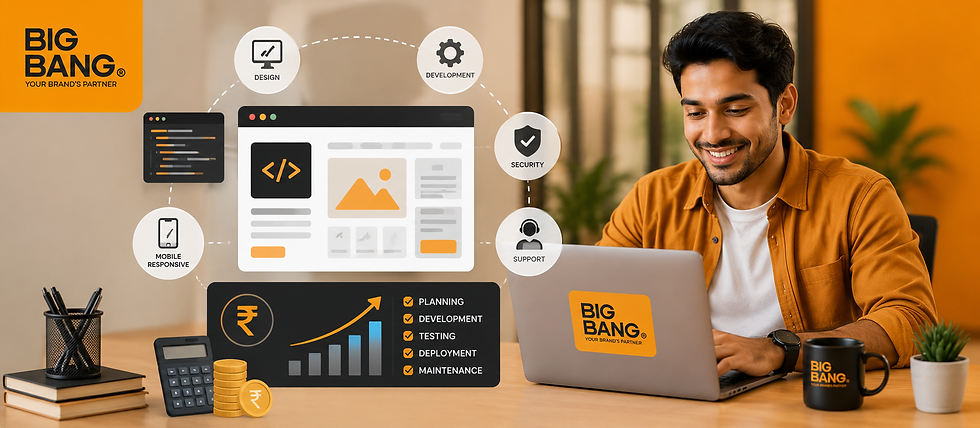
A higher custom web development cost generally includes:
Unique user interface
Custom checkout flow
ERP integration
Inventory automation
Vendor management
Advanced analytics
Custom dashboards
API development
Custom development is ideal for businesses planning sustainable growth.
Website Maintenance Charges
Launching your website is only the beginning.
Typical website maintenance charges include:
Service | Estimated Annual Cost |
Hosting | ₹3,000 – ₹25,000 |
Domain Renewal | ₹800 – ₹2,000 |
SSL Certificate | ₹0 – ₹10,000 |
Security Monitoring | ₹5,000 – ₹30,000 |
Software Updates | ₹10,000 – ₹75,000 |
Technical Support | Varies |
Regular maintenance improves website speed, security, SEO, and customer experience.
Hidden Costs Businesses Often Miss
Many ecommerce owners focus only on development costs and overlook ongoing investments.
Common hidden expenses include:
Payment gateway setup
SMS and email integrations
Premium plugins
Third-party APIs
Product photography
Content writing
SEO implementation
Performance optimization
Security upgrades
Backup systems
Planning for these expenses prevents budget overruns.
Expert Insight
The cheapest website rarely delivers the highest business value. Investing in scalable architecture, intuitive UI/UX, responsive design, and secure development reduces future redevelopment costs while supporting long-term business growth.
Businesses that prioritize customer experience typically see better engagement, higher conversions, and stronger search visibility over time.
Common Mistakes to Avoid
Avoid these costly mistakes when planning your ecommerce website:
Choosing price over quality
Ignoring mobile optimization
Skipping SEO during development
Using outdated technology
Neglecting website security
Forgetting maintenance costs
Building without future scalability
A strategic approach saves both time and money.
How to Choose the Right Ecommerce Development Company
Before selecting an agency, ask:
Do they understand your business model?
Can they build scalable ecommerce platforms?
Do they offer UI/UX expertise?
Is SEO included during development?
Do they provide post-launch support?
Can they integrate CRM and third-party systems?
Do they have proven ecommerce experience?
A reliable development partner becomes a long-term technology advisor rather than just a vendor.
Key Takeaways
Website pricing varies based on business requirements.
Responsive design and user experience directly affect sales.
Custom development offers greater flexibility and long-term scalability.
Maintenance should be included in your annual budget.
SEO-friendly development improves visibility from launch.
Choosing the right platform is as important as choosing the right developer.
Investing wisely today reduces redevelopment costs in the future.
Frequently Asked Questions
1. What is the average website development cost in India?
A basic ecommerce website usually starts around ₹40,000, while advanced custom ecommerce solutions can exceed ₹15 lakh depending on functionality and business requirements.
2. Why does ecommerce website pricing vary so much?
Pricing depends on custom features, design complexity, platform selection, integrations, security, payment systems, and development hours.
3. Is Shopify cheaper than custom development?
Yes. Shopify usually has a lower initial investment, but custom websites provide greater flexibility, ownership, and scalability for growing businesses.
4. How much should I budget for website maintenance?
Businesses generally spend between ₹20,000 and ₹1,00,000 annually depending on hosting, updates, security, and support requirements.
5. Does responsive design increase website cost?
It may increase initial development cost slightly, but responsive websites improve SEO, user experience, and mobile conversions, making it a worthwhile investment.
6. Should startups invest in custom ecommerce websites?
Startups should choose a solution that matches their growth plans. Smaller businesses may begin with Shopify, while businesses expecting rapid expansion often benefit from custom development.
7. How long does ecommerce website development take?
A standard ecommerce website usually takes 4–8 weeks. Large custom ecommerce platforms with advanced integrations may require 3–6 months.
Final Thoughts
Understanding the website development cost in India is about more than comparing quotes - it's about evaluating long-term business value. The right ecommerce website combines exceptional design, robust technology, seamless user experience, and scalable architecture to support sustainable growth.
At BigBang, we build ecommerce solutions that are strategically designed, performance-driven, and tailored to your business objectives. From intuitive UI/UX and responsive web design to custom CRM integrations and ongoing support, our team helps businesses create online stores that are built for growth.



Comments